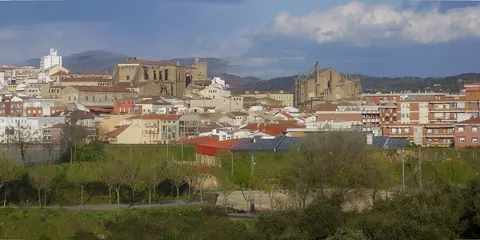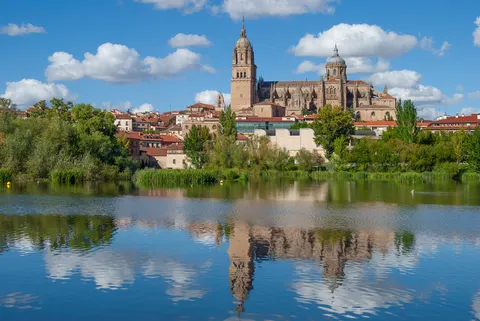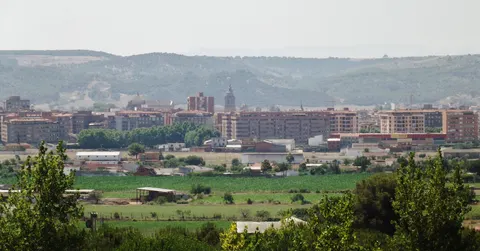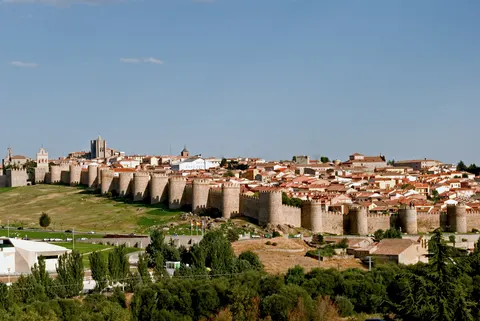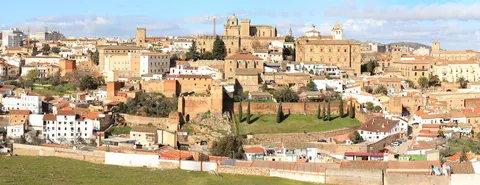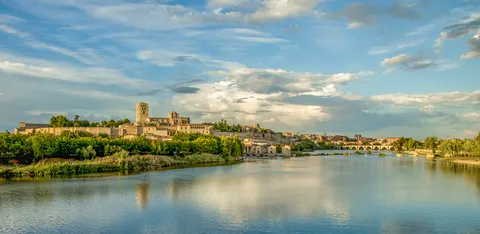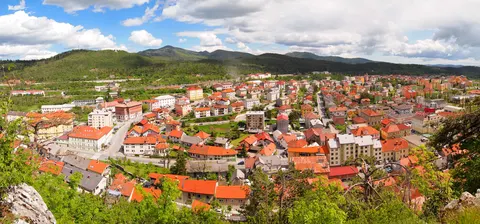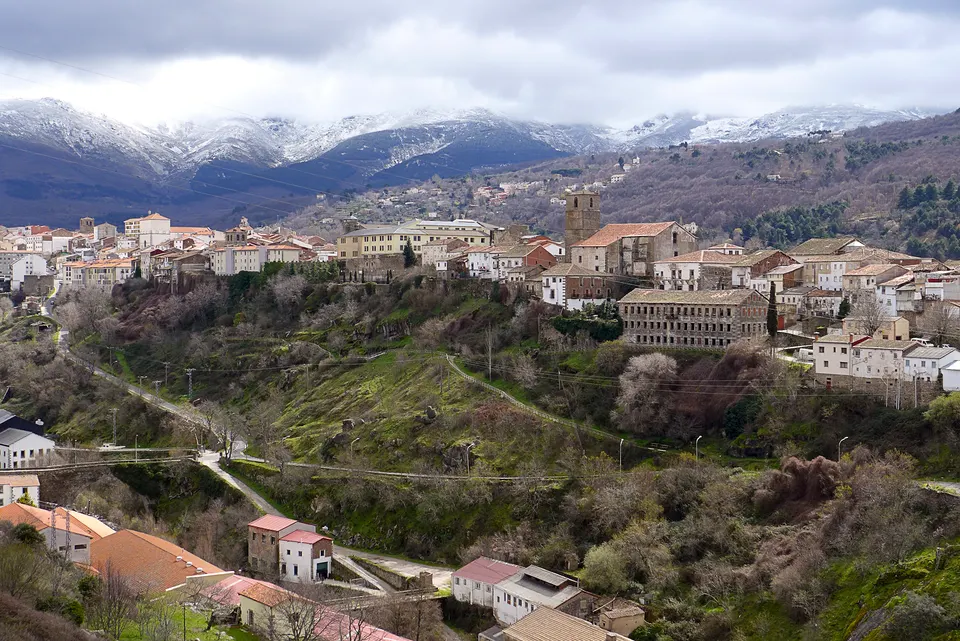

Béjar is a town and municipality in the province of Salamanca, in the Castile and León region of western Spain. It has about 12,000 people. Its history is tied to textile manufacturing, which grew strong enough that in the nineteenth century the town came to be called the Castilian Manchester. The old centre has a well-preserved medieval fort, churches and a palace that began as a fortress.
Béjar is in Castille and León, Spain, and has a population of about 15,000.
Why go to Béjar?
The town's monuments reflect centuries of change. The city walls are a well-preserved medieval fort. The Church of Saint James, a medieval church, now serves as a Museum of Religious Art. The Church of Saint Mary the Great was built over several centuries, in styles from Mudéjar to Baroque. The Jewish Museum David Melul shows the town's Hebrew past. The Ducal Palace is an old fortress that was turned into a palace for the Duke and Duchess, and it now contains a camera obscura. The wealth behind these buildings came from wool cloth, much of it made for military and civil service uniforms.
When is the best time to visit Béjar?
July and August are the warmest, with highs of about 27 °C, and January is the coolest, at about 8 °C. For nature and hiking trips, go in May, June and October.
How do I get to Béjar without flying?
From 2 destinations you can travel to Béjar directly by bus. Counting connections, 338 destinations can reach it within 14 hours without flying. Travelling from Salamanca, allow 1h 30m by bus; that is about 1.8 kg of CO₂ per person. From Plasencia, it takes 1h 00m by bus, with about 1.3 kg of CO₂ per person.
What to do in Béjar
Palacio Ducal de Béjar
A palace in Béjar.
Jardín de El Bosque
A park in Béjar.
Nature and hiking trips in Béjar
May is the ideal month for nature and hiking trips, with average highs of 18 °C.