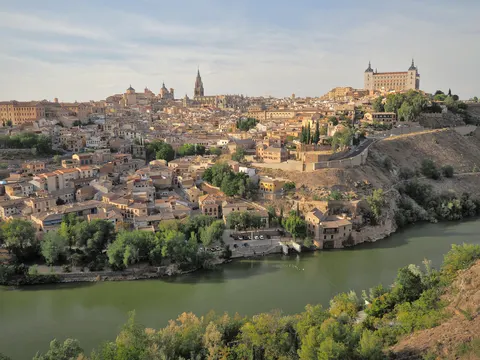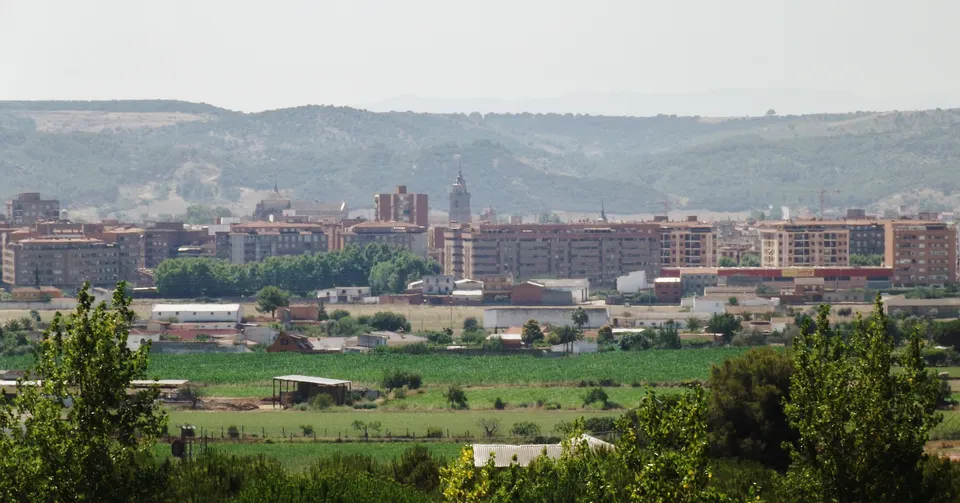

Talavera de la Reina is a city and municipality in Castile–La Mancha, Spain, in the province of Toledo. It is the second most populated municipality in its province and the fourth largest in the region. The city straddles both banks of the Tagus, a few kilometres downstream from where the Alberche joins it, though most of the urban area lies on the northern bank. Its pottery craft was recognised by UNESCO in 2019 as intangible cultural heritage.
Talavera de la Reina is in Castille-La Mancha, Spain, and has a population of about 89,000; it is also a rail hub.
Why go to Talavera de la Reina?
Talavera de la Reina is known for its pottery, a craft UNESCO recognised as intangible cultural heritage. The city straddles the Tagus, and two islands in its centre, Isla Grande and Chamelo Island, sit in the river. Three bridges cross the Tagus within the city. The Puente de Castilla-La Mancha, on the outskirts, was the highest bridge in Spain when it was completed, and its cable-stayed span crosses the main channel of the river. The Royal Factory of Silk, Silver and Gold Fabric was opened in the mid-18th century, during the reign of Ferdinand VI.
When is the best time to visit Talavera de la Reina?
July and August are the warmest, with highs of about 33 °C, and January and December are the coolest, at about 11 °C. City breaks work best in March, April and October.
How do I get to Talavera de la Reina without flying?
From 3 destinations you can travel to Talavera de la Reina directly by bus or train. Counting connections, 526 destinations can reach it within 14 hours without flying. Travelling from Madrid, allow 1h 22m by train with RENFE OPERADORA; that is about 1 kg of CO₂ per person. From Cáceres, it takes 1h 49m by train with RENFE OPERADORA, with about 1.4 kg of CO₂ per person. The train from Plasencia with RENFE OPERADORA takes 1h 37m; that is about 1 kg of CO₂ per person.
What to do in Talavera de la Reina
Puente de Castilla-La Mancha
A cable-stayed bridge on the outskirts, once the highest bridge in Spain and one of the city's most distinctive features.
Isla Grande
One of the two islands in the centre of the city, in the Tagus.
Chamelo Island
The second of the two islands in the centre of the city.