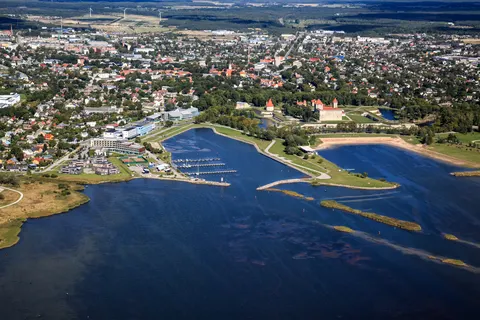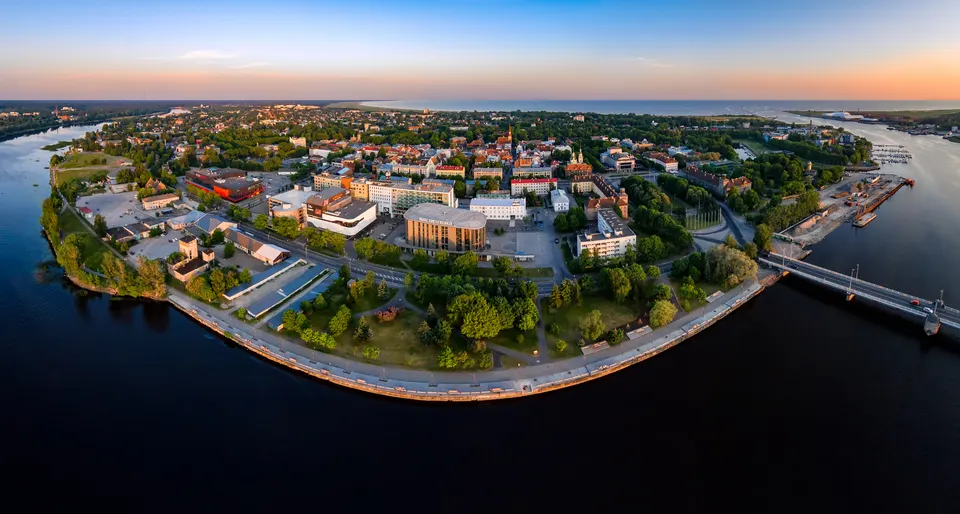

Pärnu is a city on the coast of southwest Estonia, on Pärnu Bay, an inlet of the Gulf of Riga. It lies about 128 kilometres south of Tallinn, the capital, and it has been known as Estonia's Summer Capital since 1996. Its many hotels, restaurants and large beaches make it a favourite holiday resort for Estonians.
Pärnu is in Pärnumaa, Estonia, and has a population of about 40,000.
Why go to Pärnu?
Pärnu is a summer resort first. Its beaches and seawall draw visitors, and the seawall carries a legend that a couple who holds hands along it and kisses at its endpoint will stay together forever. The stone Pärnu Mud Baths, built in 1927 on the site of an earlier bathing house, carry on the town's spa tradition. Since 2015 the annual Weekend Festival has brought DJs and electronic dance music to the city, making it one of the largest dance festivals in the Nordic and Baltic region. The majority of its tourists are Estonians, Finns and Swedes.
When is the best time to visit Pärnu?
July is the warmest, with highs of about 22 °C, and January and February are the coolest, at about -2 °C.
How do I get to Pärnu without flying?
From 11 destinations you can travel to Pärnu directly by bus. Counting connections, 159 destinations can reach it within 14 hours without flying. Travelling from Tallinn, allow 1h 37m by bus with FlixBus-eu; that is about 3.2 kg of CO₂ per person. From Riga, it takes 2h 25m by bus with FlixBus-eu, with about 4.4 kg of CO₂ per person against 21 kg for the flight, 79% less. The bus from Tartu with GoBus AS takes 2h 35m; that is about 3.5 kg of CO₂ per person.
What to do in Pärnu
Pärnu Mud Baths
A stone building that replaced an early bathing house on the same site, offering the town's mud and seawater baths.
Kursaal
A hall close to the beach, used for concerts.
Pärnu seawall
The seawall along the bay, where the legend says that a couple who kisses at its endpoint after holding hands will stay together.