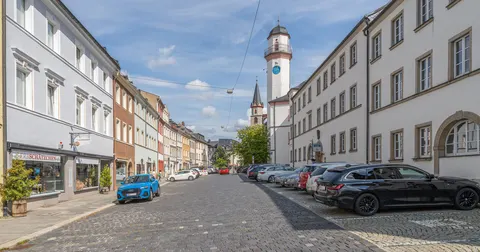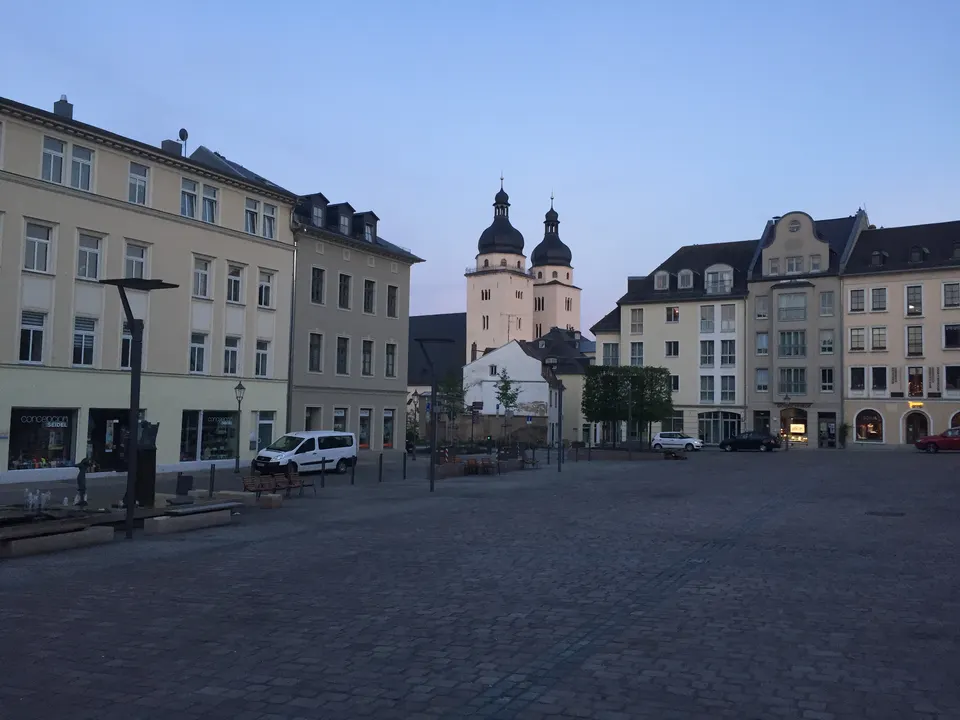

Plauen is a town in Saxony, Germany, with about 65,000 residents. It is the county seat of the Vogtland District and the largest city in the Saxon Vogtland region. It lies on the upper reaches of the White Elster River in the Central Vogtlandian Hill Country, close to the borders with Bavaria and the Czech Republic. Many of its place names are of Slavic origin.
About 66,000 people live in Plauen, in Saxony, Germany, and its station is a rail hub.
Why go to Plauen?
Plauen is the historic centre of the German embroidery and lace industry, and its products carry the protected label Plauener Spitze, Plauen Lace. The Elster Viaduct spans the White Elster valley between Plauen and Pöhl and is the second-largest brick bridge in the world. The Erich-Ohser-Haus art museum and the Embroidery Machine Museum show the town's craft heritage. The local dialect is a variety of East Franconian with Saxon influences.
When is the best time to visit Plauen?
Expect daytime highs of about 22 °C in July and August, falling to 1 °C in January.
How do I get to Plauen without flying?
You can get to Plauen without changing from 5 destinations, by bus or train. With changes, Plauen is within 14 hours of 2,239 destinations without flying. From Regensburg, it takes 2h 42m by bus with FlixBus-eu, with about 4.5 kg of CO₂ per person against 38 kg for the flight, 88% less. Travelling from Chemnitz, allow 1h 01m by bus with FlixBus-eu; that is about 1.8 kg of CO₂ per person. Hof is 31 min away by train with Mitteldeutsche Regiobahn, with about 0.5 kg of CO₂ per person.
What to do in Plauen
Elster Viaduct
A brick bridge that spans the valley of the White Elster between Plauen and Pöhl.
Embroidery Machine Museum
A museum on the embroidery industry that made the region known.
Fabrik der Fäden
A museum of textile and lace making.
Galerie e.o.plauen, Erich-Ohser-Haus
An art museum named after the cartoonist Erich Ohser.
Find tours and tickets: Galerie e.o.plauen, Erich-Ohser-Haus