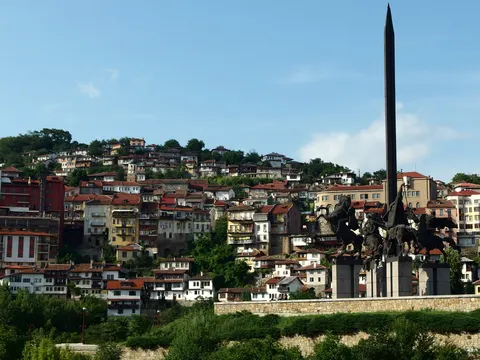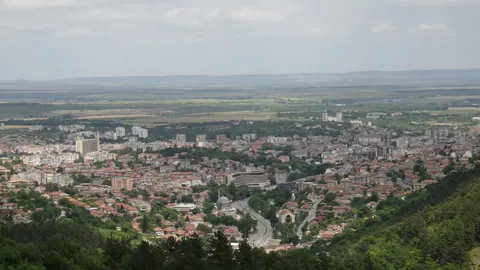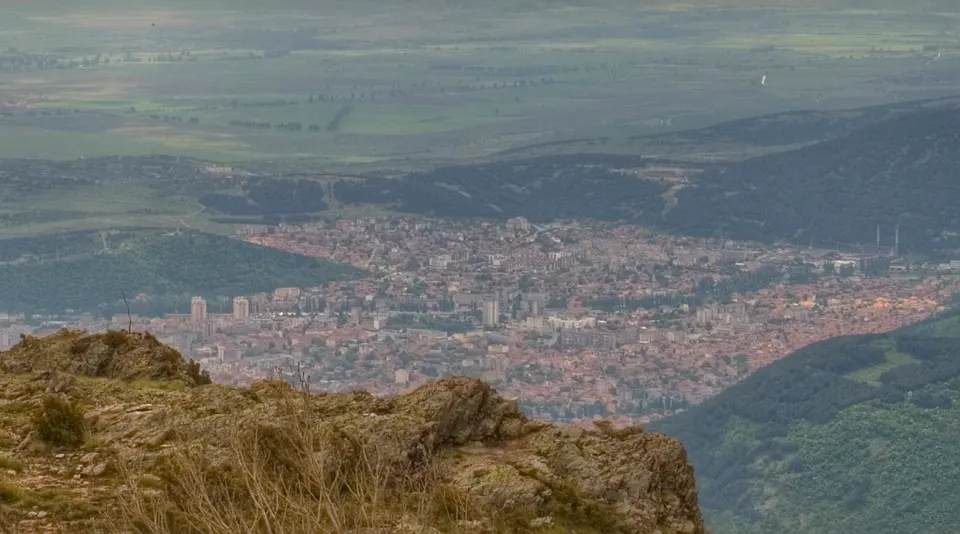

Sliven is the eighth-largest city in Bulgaria and the administrative and industrial centre of its province. It lies in the Sliven Valley at the foothills of the Balkan Mountains, about 300 kilometres east of Sofia. The city is known for the haiduti who fought the Ottoman Turks in the 19th century, and it is called the City of the 100 Voyvodi after their leaders.
With about 84,000 inhabitants, Sliven lies in Bulgaria and is a rail hub.
Why go to Sliven?
Sliven has a strong sense of its past. The city is known for the haiduti, the armed resistance fighters who opposed Ottoman rule, and its more than thousand-year-old Old Elm is its symbol. Outside the centre, the rocky massif of Sinite Kamani, the Blue Rocks, and its nature park offer leisure and tourism. The hilltop of Karandila looks over the city from 1,050 metres. Mineral springs at Slivenski Mineralni Bani, some way southeast, add to the appeal of the area.
When is the best time to visit Sliven?
Average highs range from 5 °C in January and December to 27 °C in July and August.
How do I get to Sliven without flying?
Direct bus or train services link Sliven with 3 destinations. Allowing for changes, 150 destinations are no more than 14 hours away without flying. Varna is 4h 00m away by bus, with about 3.8 kg of CO₂ per person. The train from Burgas with BDZ takes 1h 36m; that is about 1 kg of CO₂ per person. From Stara Zagora, it takes 1h 30m by bus, with about 1.7 kg of CO₂ per person.
What to do in Sliven
Saint Nikola church
A church in Sliven.
Travel on from Sliven
Direct links run to Varna, Burgas and Stara Zagora.
Compare the trip with flying
The trip planner compares train, bus and ferry options to Sliven with a flight, including CO₂.