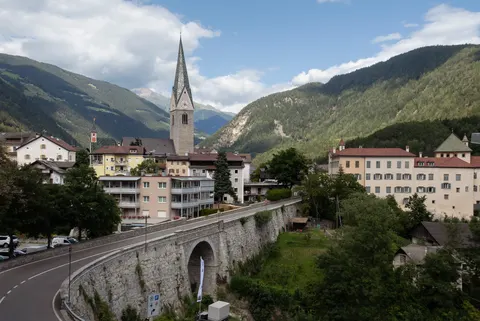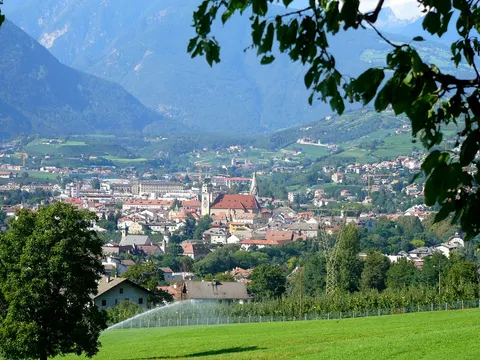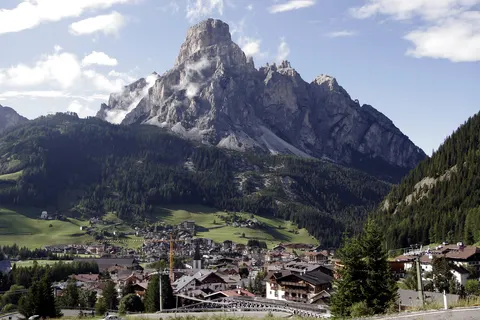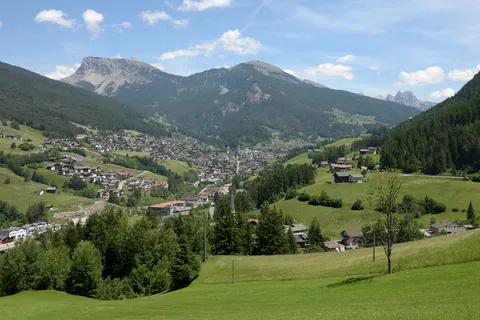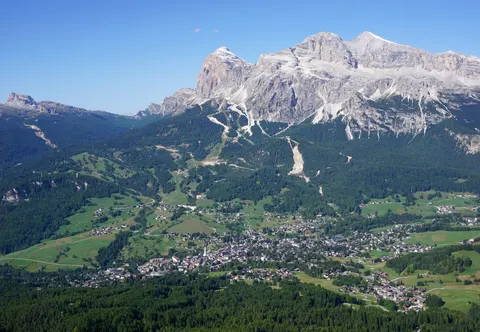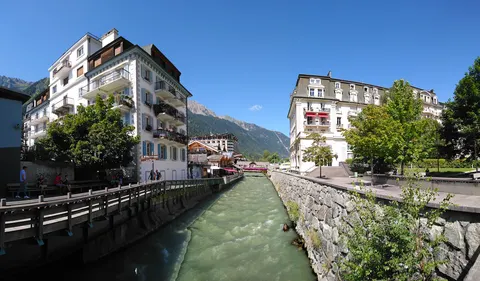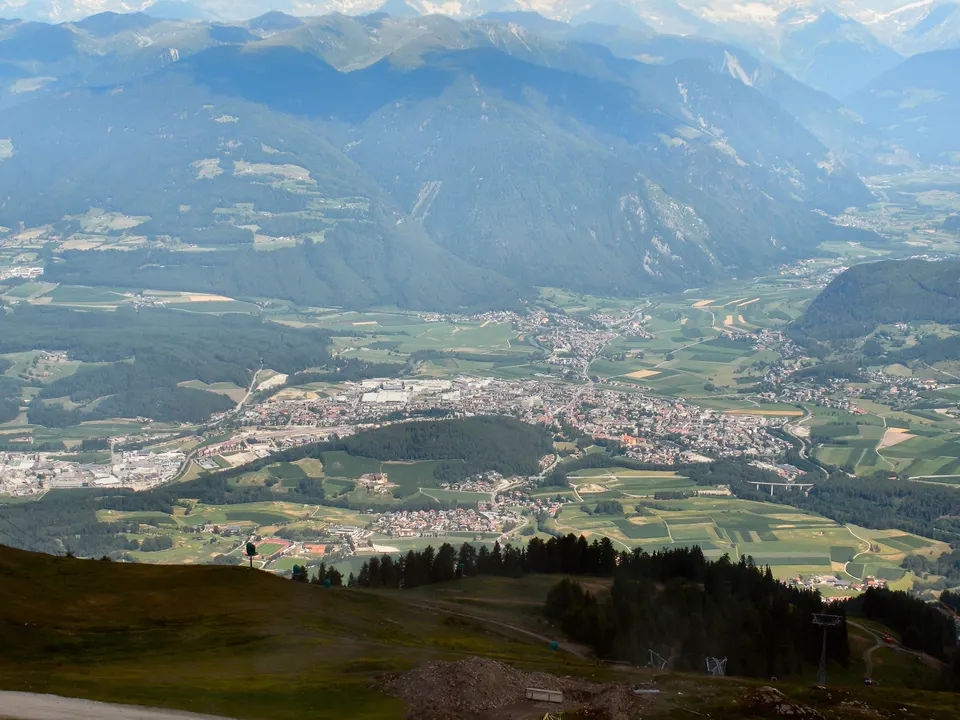

Brunico, known in German as Bruneck, is the largest city in the Puster Valley in the Italian province of South Tyrol. It lies in a wide valley at the confluence of the Ahr and the Rienz rivers, where side valleys join the broad Pustertal. The Kronplatz massif rises to the south, part of the Dolomites.
Brunico, in Trentino-Alto Adige, Italy, is home to about 12,000 people.
Why go to Brunico?
Brunico sits in the middle of a broad valley, with the Zillertal Alps to the west and the Rieserferner group to the east. The Kronplatz is a popular ski area, and on its summit stands the Messner Mountain Museum Corones, a building designed by Zaha Hadid. The town holds markets and festivals all year round. The Puster Valley was the main road linking Northern Italy with the Danube area, and that trade shaped the town's wealth. Its medieval town walls and moat still survive, and the Rainkirche stands inside them.
When is the best time to visit Brunico?
In July and August the average high reaches 23 °C; in January it is closer to 2 °C. If you are after skiing, aim for January, February and December. Nature and hiking trips work best in May, June and September.
How do I get to Brunico without flying?
Brunico has direct bus or train links to 6 destinations. Within 14 hours, travellers from 2,258 destinations can get here without flying. The bus from Corvara in Badia with altoadigemobilità takes 50 min; that is about 0.8 kg of CO₂ per person. Valle Aurina - Ahrntal is 48 min away by bus, with about 0.6 kg of CO₂ per person. Travelling from Sesto, allow 1h 00m by train; that is about 0.4 kg of CO₂ per person.
What to do in Brunico
Messner Mountain Museum Corones
A museum on top of the Kronplatz ski area, in a building designed by Zaha Hadid.
Rainkirche
The first church inside the town walls, built beneath the castle and still standing.
Stegener Market
A market held at the end of October, the largest market in Tyrol.
Ballplatz
The square where goods from the trade between Augsburg and Venice were stored in the 14th and 15th centuries.