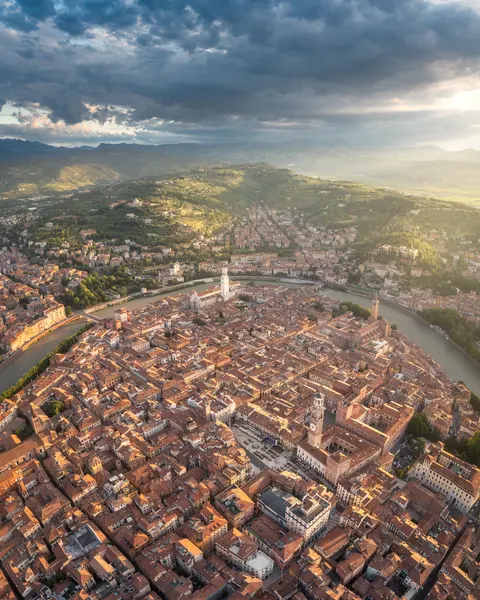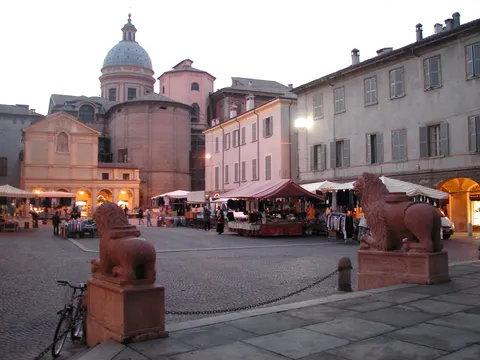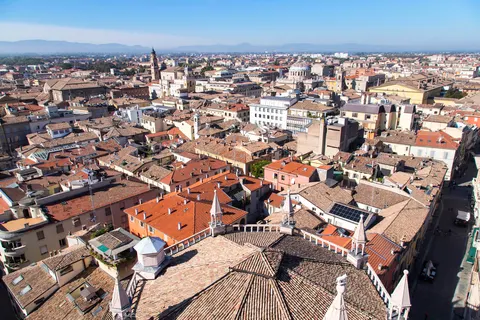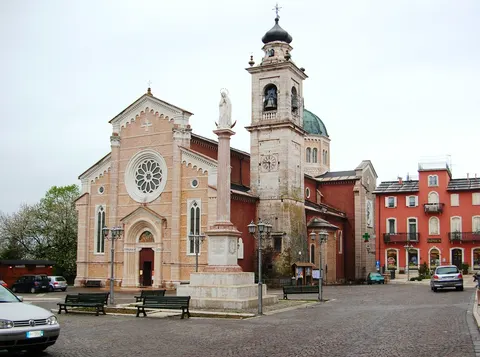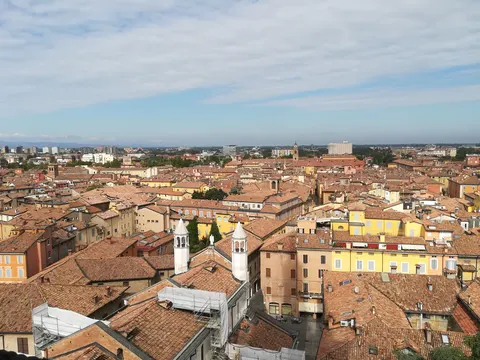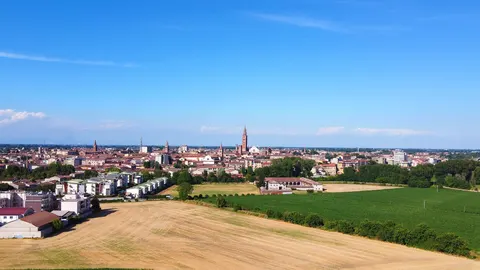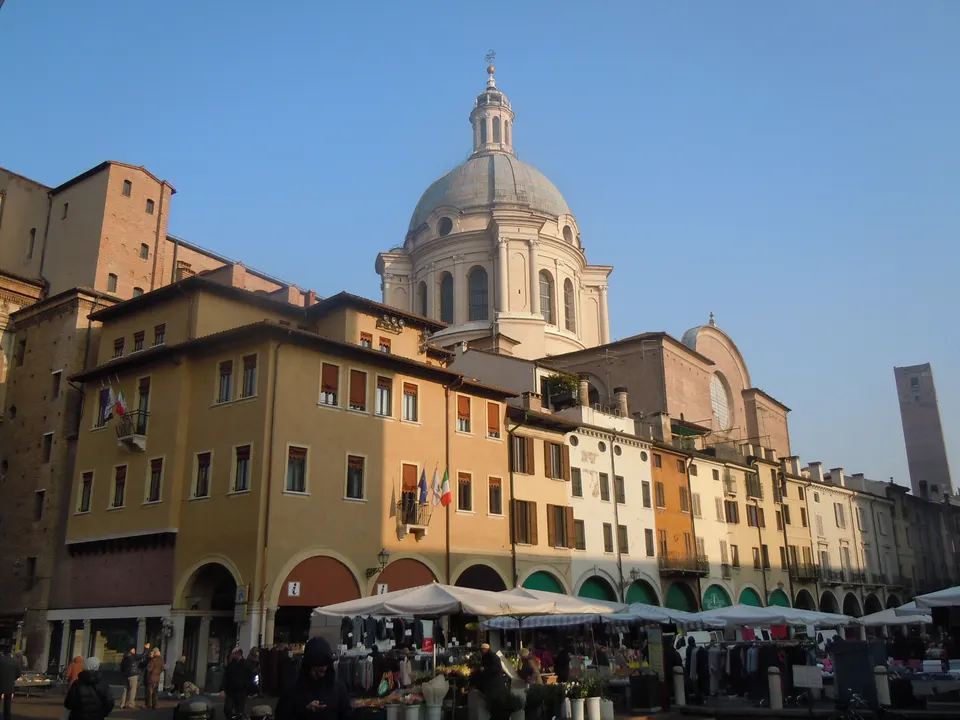

Mantua is known for its palaces, which sit close together in the old centre and reflect the city's long years as a princely court. The town lies in Lombardy in northern Italy, with lakes and flat river country around it. The Palazzo Ducale Mantua and the Palazzo del Te give the city its grandest faces, while the streets between them are quiet and easy to walk.
Mantua, in Lombardy, Italy, is home to about 39,000 people.
Why go to Mantua?
Come to Mantua for the palaces, the churches and the sense of a city shaped by art. The Palazzo del Te and the Palazzo Ducale Mantua are the two sights many visitors plan a day around, and each shows a different side of the court's taste. The Mantua Cathedral and the Basilica of Sant'Andrea stand in the centre, and the Rotonda di San Lorenzo and San Sebastiano offer quieter stops. The Basilica Palatina di Santa Barbara and the Palazzo d'Arco add more palace and church layers. The Teatro Bibiena is a theatre museum for those who like the stage. Saint George Castle gives a view over the lakes. The UNESCO listing of Mantua and Sabbioneta reflects how the city's design holds together. Verona and Bologna are within reach for longer trips, and Trento lies further north. Mantua suits a City & Culture trip with time to see each palace slowly.
When is the best time to visit Mantua?
In July the average high reaches 30 °C; in January and December it is closer to 7 °C. Any month suits city breaks.
How do I get to Mantua without flying?
Mantua has direct bus links to 4 destinations. Within 14 hours, travellers from 2,137 destinations can get here without flying. The bus from Rome with FlixBus-eu takes 6h 00m; that is about 10 kg of CO₂ per person, 89% less than the 89 kg of a flight. Bologna is 1h 24m away by bus with FlixBus-eu, with about 2.3 kg of CO₂ per person. Travelling from Verona, allow 40 min by bus with FlixBus-eu; that is about 0.9 kg of CO₂ per person.
What to do in Mantua
Palazzo Ducale Mantua
Walk through the Palazzo Ducale Mantua at an unhurried pace, noticing the rooms and courtyards that once served a court. It is the sight that sets the tone for the visit.
Basilica of Sant'Andrea
Step into the Basilica of Sant'Andrea and then walk to the Mantua Cathedral, comparing the two churches. Both give a sense of the city's religious and artistic life.
Palazzo del Te
Spend an afternoon at the Palazzo del Te, a palace with gardens and painted rooms set on the edge of the centre. It makes a relaxed contrast to the old streets.