
By train
93% less CO₂The Hague
By train from Rome
Route
Italy → Netherlands
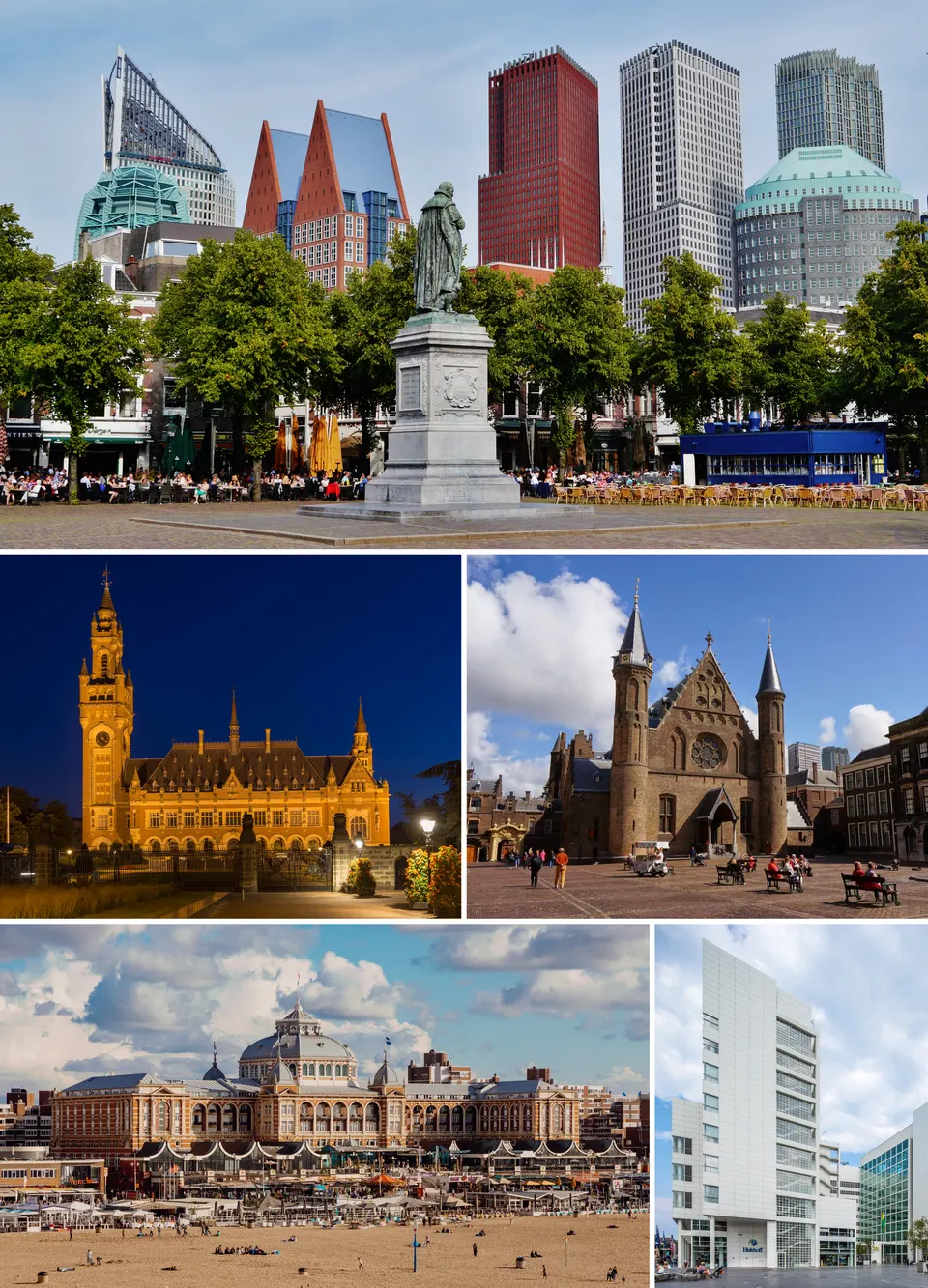
Plan this tripPhoto: Montage by Ætoms, CC BY-SA 4.0, Wikimedia Commons
By train in 13h 57m with 5 changes, 11 kg CO₂ per person — 93% less than the flight’s 165 kg CO₂e (door to door 6h 14m).
By train from Rome
By plane from Rome
165kg CO₂e
Per person, one way
6h14m
One way, door to door
It would take about 8 trees a full year to absorb the flight’s 165 kg CO₂e.
Only 2h14m of the 6h 14m is spent in the air.
Travel to the airport
Door to terminal
Check-in, security, boarding
Arrive early, queue, wait
Flight to The Hague
165 kg CO₂e per trip
Travel into the city
Terminal to city centre
Arrive in The Hague
6h14mFlight figures are CO₂e: they include the warming effect of emissions at altitude (radiative forcing). Train, bus and ferry figures are CO₂. How we calculate
Allow 13h 57m to get from Rome to The Hague by train, with 5 changes. The trip is run by Trenitalia, SNCF VOYAGEURS and Eurostar, among others. Per person, the trip produces about 11 kg of CO₂ against 165 kg CO₂e by air, a saving of 93%. Allow 7h 43m more than the flight, door to door.
The Mauritshuis, the Escher Museum and the Panorama Mesdag are three named sights in The Hague, a city that is the seat of government of the Netherlands. The Noordeinde Palace and Huis ten Bosch sit among its named landmarks. Amsterdam is the official capital, a fact that gives The Hague its own character. Coming from Rome, a city of seven hills, you travel north through Paris and Brussels to a city on the western coast facing the North Sea. The trip suits a traveller who wants museums, palaces and a seat of government by the sea. The Kunstmuseum Den Haag adds a gallery stop, and Madurodam is a named sight.
The Hague suits city breaks in any month.
Going the other way? The figures here are for Rome to The Hague; the trip planner searches The Hague to Rome just as well, for your own dates.